
Florida Amendment 3: What It Means for Homeowners and Buyers
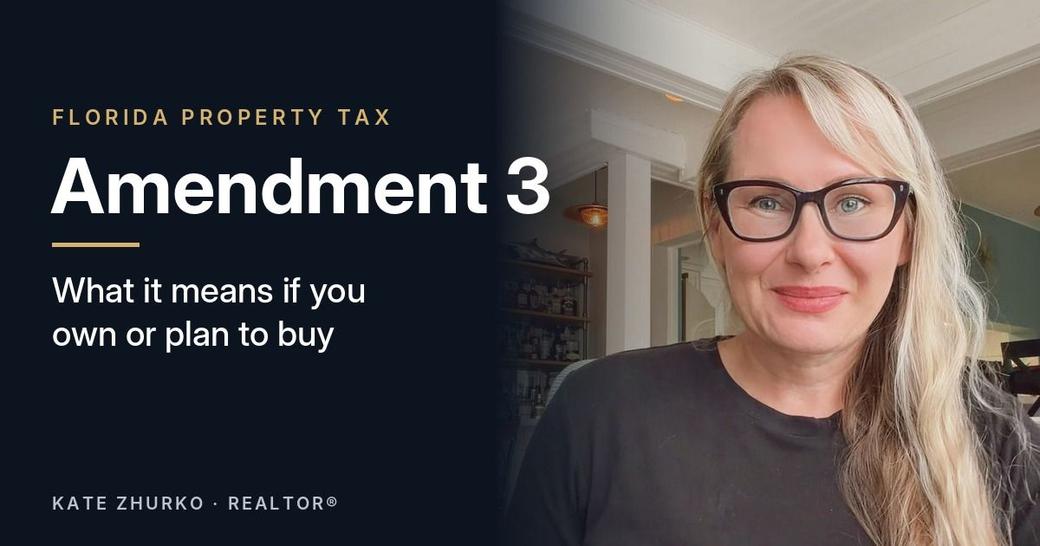
Florida voters approved Amendment 3 on November 3, 2026. It is one of the biggest property tax changes Florida homeowners have seen in decades.
Everyone is talking about lower taxes. But there's one date most people are missing, and it matters most if you're planning to buy or move here.
Here's what the amendment does, and what it means if you already own a home in Fort Lauderdale or Broward County, own a rental or second home, or plan to buy.
What Amendment 3 changes
The homestead exemption on non-school property taxes goes up to $150,000 in 2027 and $250,000 in 2028. After that, it adjusts for inflation each year starting in 2029.
|
Year |
Homestead exemption (non-school taxes) |
|---|---|
|
2026 |
About $50,000 (current law) |
|
2027 |
$150,000 |
|
2028 |
$250,000 |
|
2029 and later |
$250,000, adjusted for inflation |
The higher exemption only applies to county, city and special district taxes. School taxes keep the existing $25,000 exemption, so your bill won't drop to zero.
The amendment also lowers the yearly cap on assessment increases for non-homestead properties from 10% to 5%.
If you already own and live in your home
Good news: you're in. If you already have a homestead exemption and you're a Florida resident, you qualify for the larger exemption as it phases in.
The protections you already count on stay the same:
- Save Our Homes still caps yearly increases in your home's assessed value at 3%.
- Portability still lets you carry your Save Our Homes savings to a new Florida homestead, up to $500,000.
If you've been thinking about moving within Florida, your savings travel with you the same way they do today.
If you own a rental or second home
Rentals, second homes and commercial properties don't get the bigger homestead exemption. But they do get relief.
Starting in 2027, the yearly cap on assessment increases for non-school taxes drops from 10% to 5%. In a market where values keep climbing, that means slower, more predictable tax increases on your investment property.
If you're buying: the December 31 deadline
This is the part most people are missing. When you get the bigger exemption depends on where you're coming from.
Moving from out of state? To get the full exemption on the normal schedule, you need to be a Florida resident by December 31, 2026. If you become a resident after that, you start with the current exemption. The full benefit kicks in during your 5th year of homestead exemption.
Already live in Florida? Your homestead for a given tax year is based on the home you own and live in on January 1. Close by the end of December, and you could get the bigger exemption on your 2027 taxes. Close in January, and you'd wait until 2028.
Either way, after you close you still need to apply for homestead with the property appraiser. The deadline is March 1 of the tax year.
That said, a tax break alone isn't a reason to rush a purchase. The right timing depends on your finances, your move and the home itself.
What's still being worked out
The Florida Legislature and local governments still have to set the implementation details. That includes how the residency rules will be applied, and what counties change to make up for lost revenue.
Until that guidance comes out, check the Broward County Property Appraiser for the latest on your property.
Planning a move or a purchase?
If you're thinking about buying in Fort Lauderdale or anywhere in Broward County, timing matters more than usual this year. Send me a message and we can talk through what makes sense for you.
Kate Zhurko, Realtor® | katezhomes.com
This post is for general information only and isn't tax or legal advice. Talk to a tax professional or the property appraiser about your situation.
Sources
- Florida voters approve Amendment 3, Florida Realtors
- Florida Amendment 3 is approved, CBS Miami
- Florida property tax resource center, Florida TaxWatch
- Proposed 2026 Florida Property Tax Amendment 3, Volusia County Property Appraiser
Categories
Recent Posts



GET MORE INFORMATION

Broker Associate License ID: 3229050
1200 E Las Olas Blvd Ste 102 Fort Lauderdale, FL 33301, USA, United States